Casey Hoffmann · 3 November 2026
Savena's Astronomy Groups Campaign for Dark Sky Reserve Recognition as Light Pollution Grows
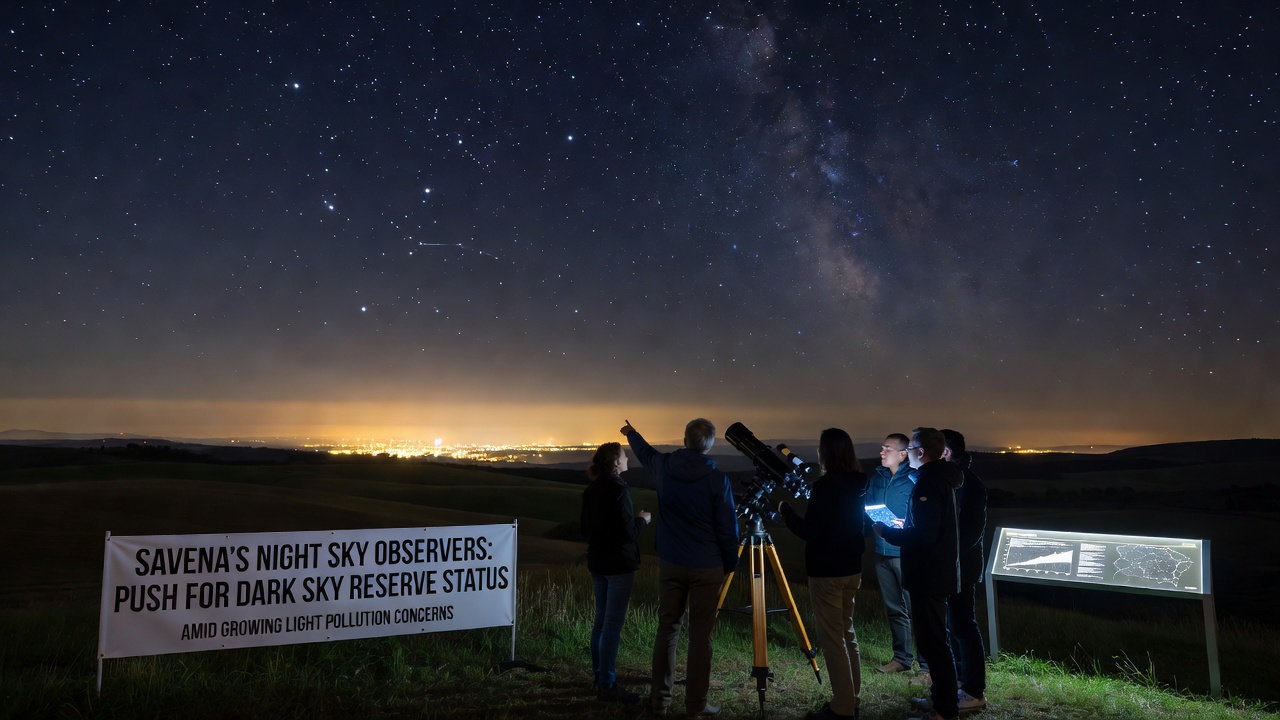
Local astronomy enthusiasts and environmental researchers in the Savena region have launched coordinated efforts to secure International Dark Sky Reserve designation for key valley areas, and these initiatives come as satellite data and ground measurements document steady increases in artificial light levels across rural zones. Groups such as the Savena Night Sky Observers Association have compiled multi-year records of sky brightness using standardized meters, while they coordinate with municipal planners to adjust street lighting fixtures and reduce upward light spill.
Measuring the Scale of Light Pollution in Savena
Data collected through 2025 and into late 2026 indicate that sky glow has risen by measurable percentages in several Savena sub-valleys, particularly near expanding residential clusters and along main transport routes. Observers note that the Milky Way, once visible on most clear nights from higher elevation sites, now requires travel to more remote ridges for consistent viewing. Equipment deployed at fixed monitoring stations records luminance values that exceed thresholds recommended by dark-sky certification programs, and these readings align with broader European trends reported by environmental monitoring networks.
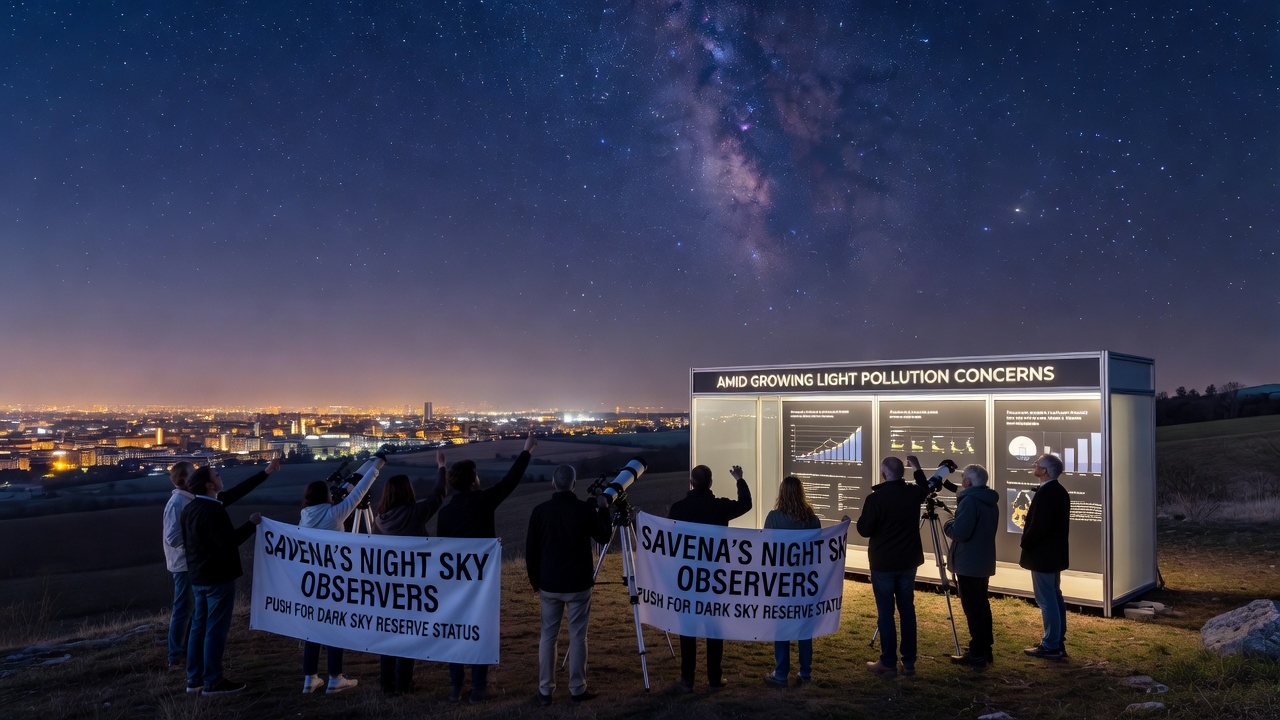
Community volunteers have mapped specific sources including unshielded floodlights at agricultural facilities and decorative lighting around newer tourism developments. They present these findings at public meetings where local officials review options for full-cutoff fixtures and timed dimming schedules. Such steps mirror programs already implemented in other protected landscapes across the continent.
Campaign Milestones and Stakeholder Involvement
The push gained momentum after a November 2026 forum hosted at the Savena Valley Cultural Center, where representatives from regional planning offices, university astronomy departments, and tourism boards reviewed certification criteria set by DarkSky International. Participants examined case studies from established reserves in North America and Australia, noting that successful applications typically require documented reductions in light trespass over three to five years plus ongoing monitoring commitments. Savena groups have since submitted preliminary inventories of existing lighting and proposed pilot zones for immediate upgrades.
Schools in surrounding villages have incorporated simple sky quality measurements into science curricula, allowing students to contribute data points while learning about atmospheric science. These classroom projects feed into larger datasets used by the campaign organizers, and several student teams presented posters at the November gathering. Tourism operators, meanwhile, explore ways to market the valley's remaining dark-sky assets to visitors seeking stargazing experiences without traveling far from established trails.
Potential Outcomes of Reserve Status
Certification would require adherence to lighting ordinances that limit color temperature and direct illumination downward, measures already shown in other regions to lower energy consumption while preserving nocturnal habitats. Studies from research institutions in Canada and the United States link reduced artificial light at night with improved conditions for nocturnal pollinators and migratory birds, factors that interest local agricultural cooperatives tracking pollinator health. Economic analyses prepared by regional development agencies suggest that certified dark-sky areas can attract specialized tourism revenue, offsetting costs associated with fixture replacements.
Advocates emphasize that the designation process does not restrict development outright but channels it toward lighting designs that minimize sky glow. They point to examples in the Scottish Highlands and parts of New Zealand where similar policies have coexisted with modest population growth. Savena planners continue to evaluate zoning adjustments that would apply primarily to new construction and major renovations rather than retrofitting every existing structure immediately.
Technical and Logistical Considerations
Reserve applications demand precise mapping of the core area and buffer zones using both satellite imagery from sources such as the European Space Agency and calibrated handheld photometers. Campaign leaders have contracted with a university team to produce the required geographic information system layers, and preliminary boundary proposals center on higher-elevation plateaus that already experience lower light intrusion. Public education campaigns accompany these technical steps, with evening viewing sessions held at accessible trailheads to demonstrate current conditions and the benefits of proposed changes.
Funding discussions involve a mix of regional environmental grants, contributions from astronomy equipment manufacturers, and volunteer labor for data collection. Observers continue to log monthly readings at established sites, building the longitudinal record required for a complete submission package expected in 2027.
Conclusion
The Savena effort reflects a growing pattern of communities balancing development pressures with preservation of natural darkness, and the outcome will depend on sustained coordination among observers, local government, and scientific partners. As measurements accumulate and lighting upgrades progress, the region moves closer to formal recognition that could set standards for neighboring valleys facing similar challenges.